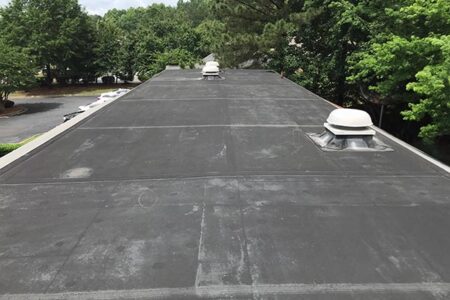
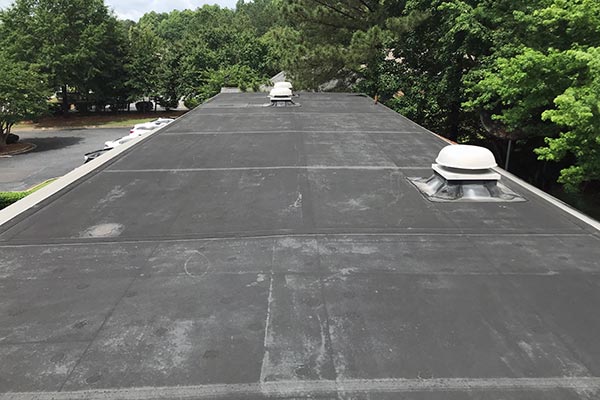

In most commercial settings, yes. In some form, secure bonding is necessary. Whether through full adhesion, mechanically fastened systems with adhered seams, or reinforced perimeter zones, EPDM needs structured attachment. It’s not about glue for the sake of glue. It’s about control. EPDM will move. Buildings shift slightly over time. Heat builds pressure. Wind tests edges without warning. A membrane installed casually will eventually show stress. Maybe not right away. Maybe not even in year one. But eventually. When installed with proper adhesion and respect for system design, EPDM sits quietly overhead for years. It lies flat. Seams remain tight. Edges stay secure through storms. The building owner rarely thinks about it and that’s the goal. There’s no slow curling at the corners or even no mysterious leaks after a heavy rain. Just a steady, black surface doing its job without asking for attention. When the question comes up again, whether EPDM really needed to be glued down, the answer usually depends on what happened over time. On whether shortcuts were taken. On whether timing was respected. On whether the roof was treated like a system or just a surface. Because in the end, EPDM doesn’t fail because it’s flexible. It fails when flexibility isn’t managed.