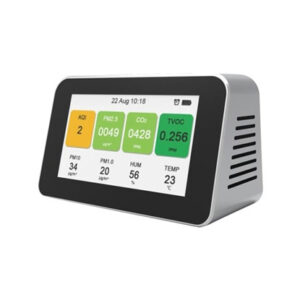
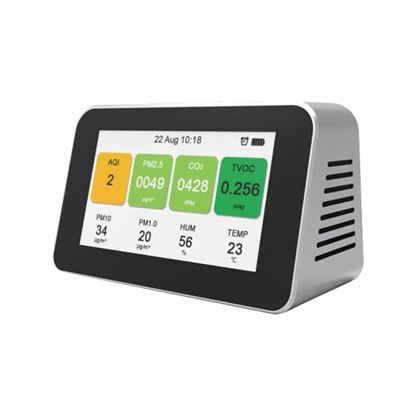

Air quality monitors are essential instruments designed to detect and measure pollutants in indoor and outdoor environments, helping safeguard human health and ensure regulatory compliance. According to ATO.com, these devices are available in various configurations ranging from portable handheld units to fixed industrial installations, with capabilities to measure multiple parameters including PM2.5, PM10, CO, CO₂, O₃, NO₂, SO₂, formaldehyde, and volatile organic compounds (VOCs). Modern air quality monitors utilize advanced sensor technologies such as electrochemical, semiconductor, infrared, and laser scattering methods to deliver real-time data with precision. Electrochemical sensors excel at detecting specific gases like carbon monoxide and sulfur dioxide through chemical reactions that generate measurable electrical signals, while laser particle counters accurately quantify particulate matter concentrations by analyzing light scattering patterns. Multi-parameter monitors can simultaneously track numerous pollutants, providing comprehensive environmental assessments for industrial facilities, commercial buildings, laboratories, and residential spaces.