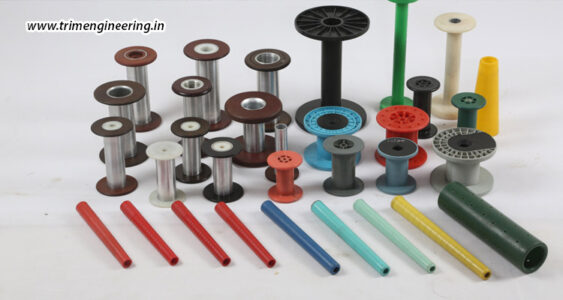
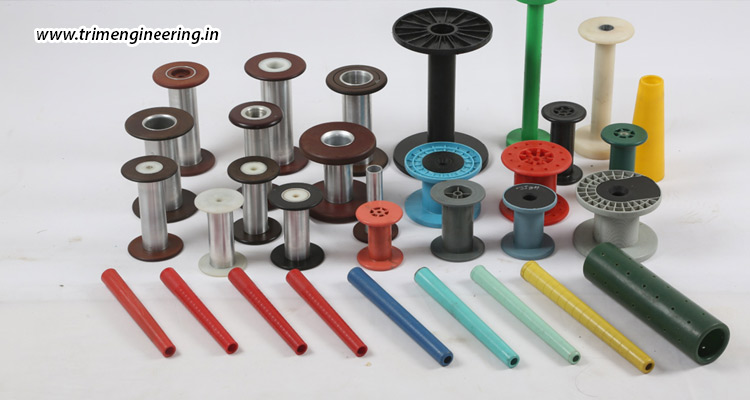

In textile manufacturing, achieving constant yarn tension and good winding quality are fundamental to guarantee defect-free production. While equipment and yarn characteristics are often paramount, the role of bobbin geometry is equally important. The shape and design of the bobbin directly affect how the yarn is wound, stored, and unwound, especially in high-speed operations such as twisting, doubling, braiding, and rope making. A bobbin is more than just a passive holder for yarn. These are specially designed components that affect voltage stability, layer formation, and overall process efficiency. Variations in geometry such as flange configuration, cylinder profile, and perforated design can significantly change the behaviour of the yarn. Understanding these geometric differences allows manufacturers to optimize machine performance, reduce yarn breaks, and improve product consistency.